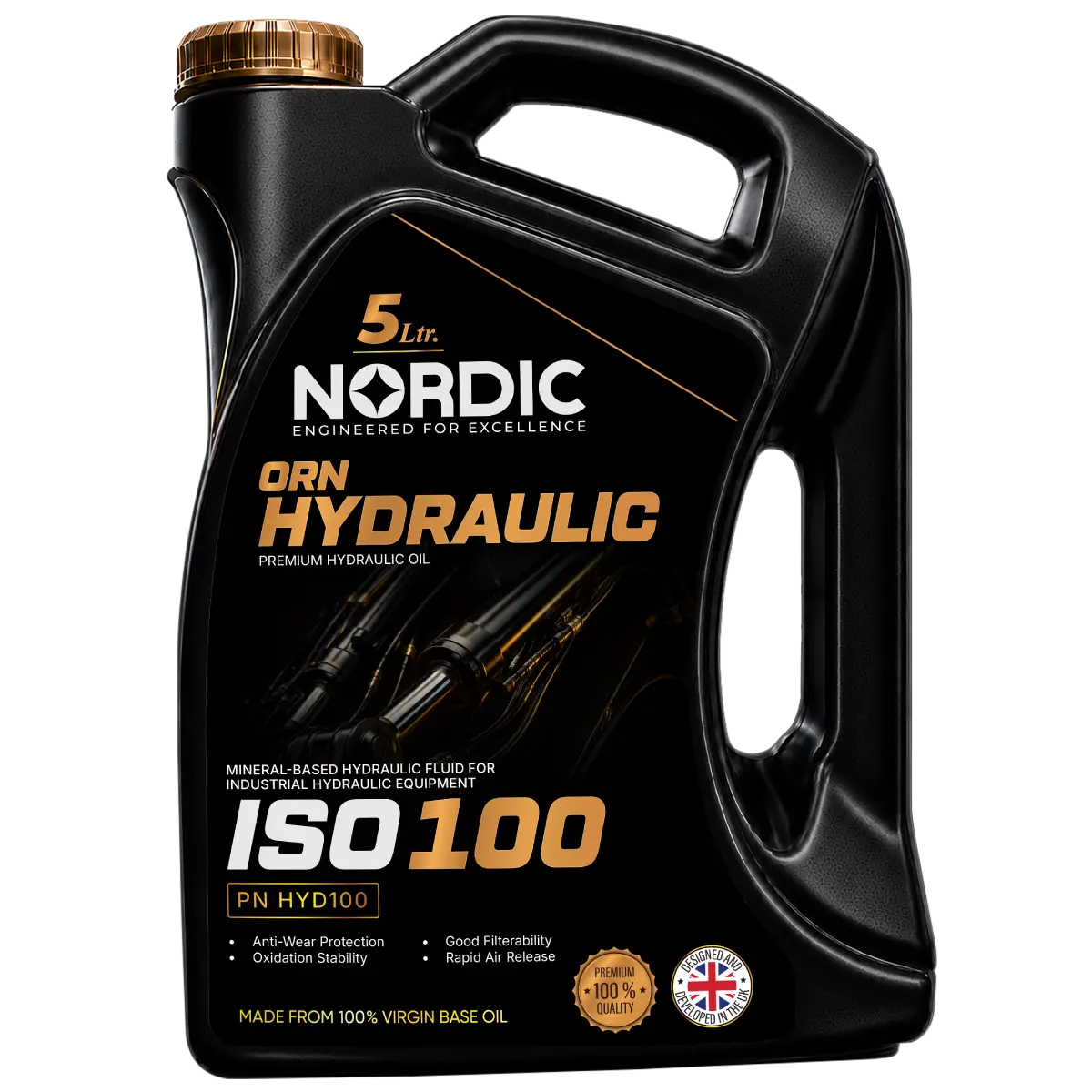
Environmental Benefits
- Oxidation-resistant performance helps maintain lubricant condition during normal service intervals and may contribute to extended oil life.
- Anti-wear protection can help reduce component wear, potentially supporting longer equipment service life and reducing maintenance-related waste.
- Foam-control characteristics assist in maintaining stable hydraulic operation and may help minimise unnecessary lubricant losses.
- Corrosion protection supports preservation of hydraulic system components operating in industrial environments.
- Stable viscosity characteristics assist in maintaining consistent lubrication performance across demanding operating conditions.
- Used oil may be recovered, recycled, or disposed of through authorised waste-oil management programmes where suitable facilities and local regulations permit.
Environmental Note
Used lubricant should be collected, stored, and disposed of responsibly. Prevent discharge into drains, sewers, soil, surface water, or groundwater. Disposal should be carried out in accordance with applicable environmental regulations. |
Typical Characteristics
| Property |
Test Method |
Unit |
Typical Value |
| Density at 15°C |
ASTM D4052 |
g/ml |
0.887 |
| Kinematic viscosity at 40°C |
ASTM D445 |
mm²/s |
101 |
| Kinematic viscosity at 100°C |
ASTM D445 |
mm²/s |
11.4 |
| Viscosity index |
ASTM D2270 |
– |
99 |
| Pour point |
ASTM D6892 |
°C |
-24 |
| Flash point COC |
ASTM D92 |
°C |
232 |
Typical Values
Typical characteristics are average production values and should not be treated as fixed sales specifications. |
Safety Precautions
Important
Read and understand the latest Safety Data Sheet before handling or using the product. The information below is general handling guidance and does not replace the SDS. |
Handling
- Read and understand the latest Safety Data Sheet before use.
- Avoid prolonged or repeated skin contact.
- Avoid contact with eyes.
- Do not ingest the product.
- Wash hands thoroughly after handling.
- Use only in equipment for which the viscosity grade and performance requirements are suitable.
Personal Protective Equipment
- Wear suitable chemical-resistant gloves when handling the product.
- Use safety glasses or goggles where splashing may occur.
- Wear appropriate protective clothing to minimise skin exposure.
- Ensure adequate ventilation where oil mist or vapour may be generated.
Storage
- Store in the original, tightly sealed container.
- Keep containers in a cool, dry, and well-ventilated location.
- Protect from direct sunlight, moisture, contamination, and excessive heat.
- Keep away from sparks, open flames, and other ignition sources.
- Prevent ingress of water, dirt, dust, or foreign materials.
Spill Response
- Stop leaks where it is safe to do so.
- Contain spills immediately to prevent environmental contamination.
- Absorb spilled product using sand, earth, or another suitable inert absorbent material.
- Dispose of recovered product and contaminated absorbent materials in accordance with local regulations.
- Clean affected surfaces thoroughly, as oil spills may create slip hazards.
First Aid Measures
- Skin contact: wash thoroughly with soap and water.
- Eye contact: rinse immediately with clean water for several minutes. Seek medical attention if irritation persists.
- Inhalation: move to fresh air if exposed to oil mist or vapour.
- Ingestion: do not induce vomiting. Obtain medical advice promptly.
General Note
Product characteristics may be updated as part of ongoing product development and technical improvement programmes. Users should verify suitability for the intended application and consult the latest Safety Data Sheet for comprehensive information regarding hazards, exposure controls, storage, transport, first aid measures, and disposal procedures.